Entire Home / Entire Place

Key Takeaways
- Entire home is Airbnb's most-booked listing type: guests receive private access to the whole property with no shared spaces or host on-site
- ADRs for entire home listings vary from $221 in Denver to $421 in Scottsdale across major U.S. markets, reflecting location, capacity, and amenity mix
- This listing type suits vacation rentals, family and group travel, remote workers, and property investors seeking maximum revenue per booking
- Entire homes can be managed remotely with self check-in systems, automated messaging, and professional cleaning crews
- Higher earning potential requires full furnishing, dedicated maintenance, and compliance with local short-term rental regulations — which vary significantly by market
How Entire Home Listings Work
When a host selects "Entire home/apt" on Airbnb or a comparable booking platform, the listing signals to guests that they will have the property entirely to themselves for the duration of their stay. No shared kitchens, no common areas with other guests, no host occupying a back bedroom.
The category covers a wide range of property types — apartments, condos, single-family houses, townhomes, cabins, villas, and estates. The defining characteristic is exclusive access, not property size. A studio apartment and a six-bedroom beach house both qualify as entire home listings if the host is absent and no spaces are shared.
Hosts can dedicate a property solely to short-term rentals, or they can list their primary residence during periods when they are traveling, working remotely, or otherwise away.
Entire Home vs Other Listing Types
| Feature | Entire Home | Private Room | Shared Room |
|---|---|---|---|
| Guest access | Full property | One bedroom + possibly shared areas | Shared sleeping space |
| Privacy level | Complete | Moderate | Minimal |
| Average nightly rate | Highest | Mid-range | Lowest |
| Host presence | Absent during stay | Typically on-site | On-site |
| Target guests | Families, groups, couples | Solo travelers, budget couples | Budget solo travelers |
| Remote management | Fully possible | Difficult | Not practical |
| Startup cost | High (full furnishing required) | Low to moderate | Minimal |
| Typical avg. stay | Longer (groups book further out) | Shorter (flexible solo travel) | Shortest |
Entire Home ADR Across U.S. Markets
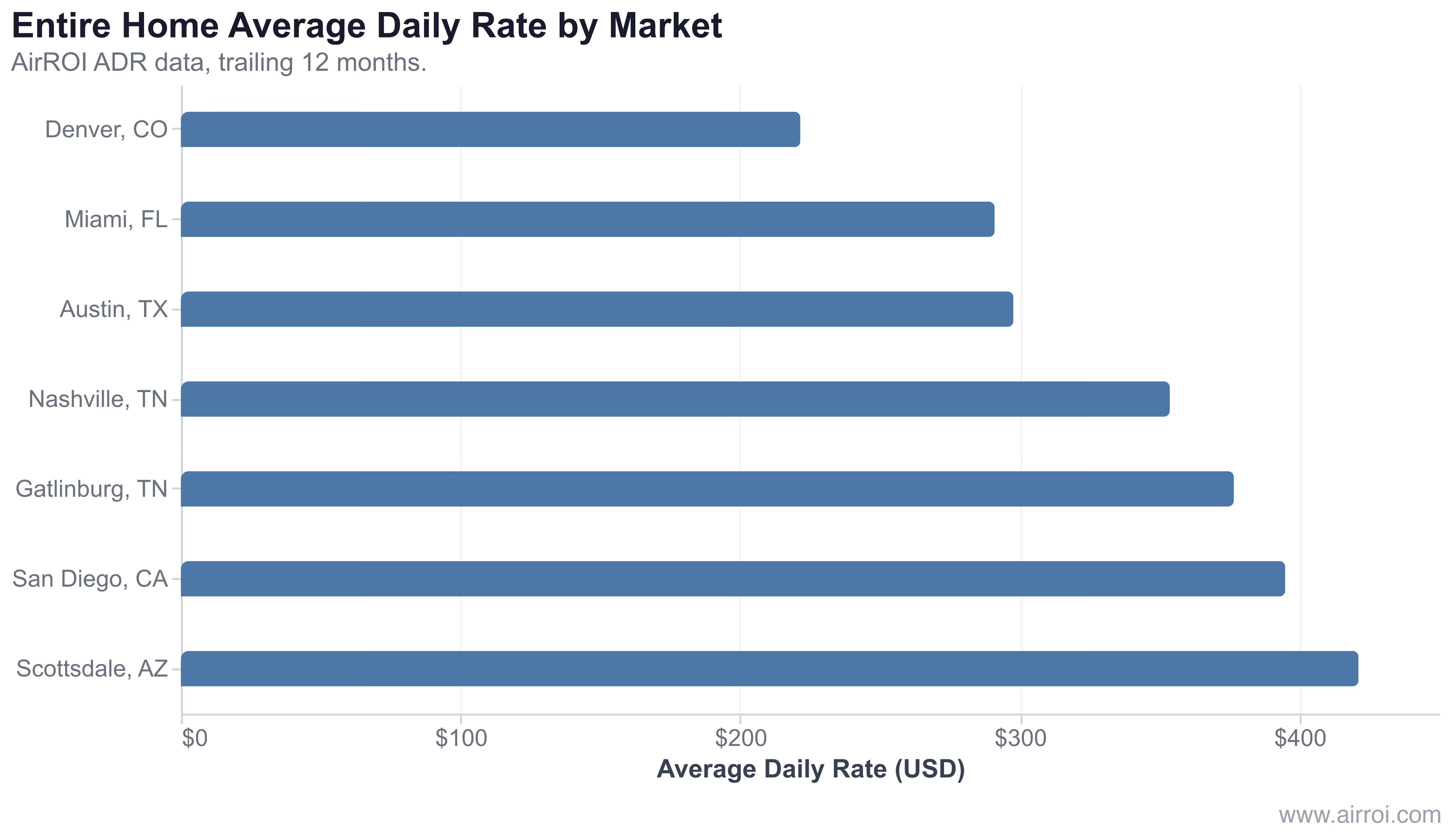
In AirROI's analysis of 44,075 active listings across seven major STR markets, entire home ADRs ranged from $221.50 in Denver to $421.10 in Scottsdale — a nearly 2× spread driven by location desirability, typical property size, and the guest mix each market attracts. Scottsdale and San Diego lead on ADR, buoyed by luxury inventory, strong leisure demand, and warm-weather year-round appeal. Denver sits at the lower end, reflecting a city-stay market where urban apartments — smaller and less amenity-rich — set the pricing floor.
The entire home category is not one market — it is seven dozen sub-markets layered on top of each other. A Scottsdale villa and a Denver studio both show up as "entire home" on Airbnb, but they compete for different guests at entirely different price points.
Why Entire Home Listings Generate Higher Revenue
Entire homes earn more for several compounding reasons:
Group capacity commands a premium. Most entire homes sleep four or more guests, and groups share the nightly cost across more people. They consistently book at higher total rates and with less price sensitivity than solo travelers.
Kitchen access unlocks longer stays. Guests staying three or more nights strongly prefer access to a full kitchen — it reduces dining costs for the group and makes extended trips financially practical. AirROI data shows that markets with longer average lengths of stay (Nashville at 3.7 nights, Gatlinburg at 3.4 nights) are overwhelmingly driven by entire-home inventory rather than private rooms.
Privacy justifies the rate. Surveys consistently show guests rate privacy as the top reason they choose entire home over private room. That preference supports both higher nightly rates and higher satisfaction scores, which in turn support higher future rates.
Entire Home and STR Regulations
Entire home listings — especially non-owner-occupied ones — face the most scrutiny under local short-term rental law. Cities targeting housing affordability tend to restrict "non-hosted" (host-absent) STRs first because they remove permanent housing from the long-term rental stock without a resident occupying the property.
What Entire Home Hosts Should Optimize
Lead time and minimum-night strategy. Entire homes typically book further in advance than private rooms. Setting appropriate minimum-night requirements — longer minimums for peak weekends, shorter ones to fill shoulder periods — significantly affects both ADR and occupancy. Markets like Scottsdale (55.6-day median lead time) reward hosts who price dynamically against long booking windows.
Turnover efficiency. Each guest transition requires a full clean of every room. Professional cleaning crews, standardized checklists, and automated scheduling via property management software reduce the per-turnover cost and allow tighter cleaning windows between same-day check-out and check-in.
Frequently Asked Questions
Entire Home on Airbnb means the guest has exclusive access to the full property — every bedroom, bathroom, kitchen, and living area — with no host present during the stay. The listing type applies regardless of property size, from a studio apartment to a multi-bedroom villa.
Yes, substantially more. AirROI data across major STR markets shows entire home ADRs ranging from $221 in Denver to $421 in Scottsdale, driven by demand for full privacy, group capacity, and kitchen access. Private rooms in the same cities typically yield 40-60% lower nightly rates.
Yes — many hosts rent their primary residence when traveling or between uses. Before listing, verify local short-term rental regulations: some cities require a permit, cap annual rental nights, or restrict entire-home rentals to owner-occupied properties only. Non-compliance risks fines and forced delisting.
An entire home gives the guest sole use of every space in the property; the host does not occupy any part during the stay. A private room gives the guest one bedroom while common areas — kitchen, living room, bathrooms — may be shared with the host or other guests.
Entire home listings generate higher ADR, longer average stays, and stronger RevPAR in most markets, making them the preferred choice for dedicated investment properties. Private rooms carry lower startup costs and suit owner-occupant hosts who want to monetize spare bedrooms while managing the property themselves.