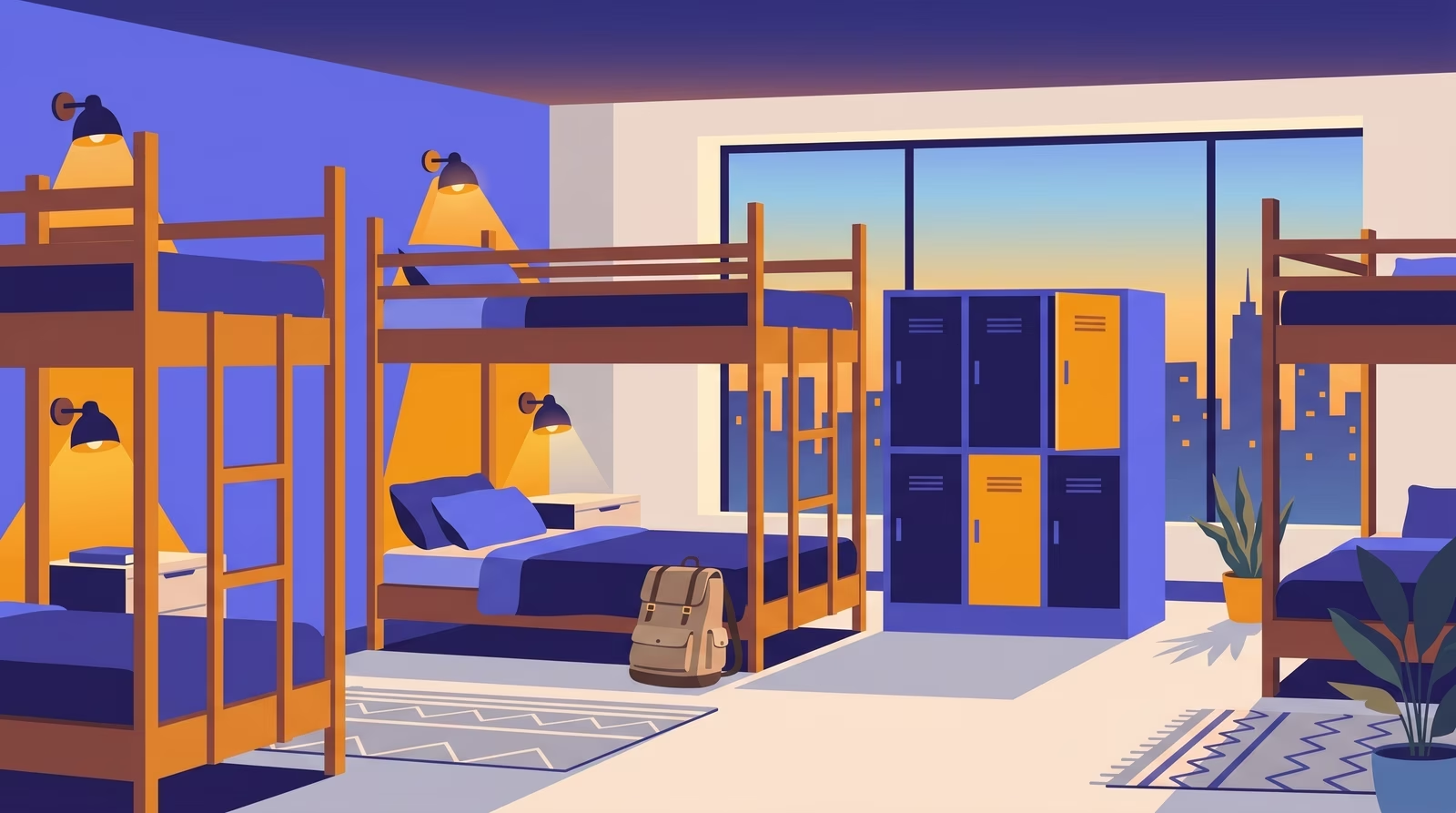
Shared Room

Key Takeaways
- A shared room offers no private sleeping space; the guest shares a bedroom or common area with the host or fellow guests, making it the closest residential equivalent to a hostel bunk
- Nightly rates are the lowest of all listing types, which attracts budget travelers, backpackers, and students — guests who prioritize price over privacy
- Market share for shared rooms is small relative to private rooms and entire homes, but the listing type fills a genuine gap in urban markets where hostel supply is limited or hotel rates are prohibitive
- Profitability depends on volume: hosts who operate bunk-bed setups and maintain high occupancy rates can generate meaningful cumulative income with near-zero property overhead
- Accurate listing photography, explicit sleeping-arrangement descriptions, and personal amenities like lockers and privacy curtains are the primary drivers of positive reviews in this segment
How Shared Room Listings Work
Airbnb defines three core listing types — entire home, private room, and shared room — by the nature of the sleeping arrangement, not the overall property type. A shared room is the most elemental: the guest's sleeping space is not separated from other occupants.
In practice, this can mean a bunk bed in a room the host also sleeps in, a mattress in a common living area, a sofa bed in a hostel-style setup with multiple guests, or a sleeping area screened only by curtains rather than walls. The common thread is that no enclosed bedroom is reserved exclusively for the guest.
Guests booking a shared room are typically aware of — and actively choosing — the arrangement. They appear most often on listings near universities, in dense urban neighborhoods, close to major transit hubs, and in established backpacker destinations where budget accommodation is routinely sought.
For hosts, the decision to list as a shared room usually means one of two things: they live in a small unit and rent a portion of their own sleeping space, or they operate a purposefully structured bunk setup to accommodate multiple guests simultaneously and aggregate nightly revenue that would otherwise be unattainable from a single booking.
Shared Room vs. Other Listing Types
The three Airbnb listing types sit on a spectrum of privacy and price:
| Feature | Shared Room | Private Room | Entire Home |
|---|---|---|---|
| Sleeping arrangement | Shared with host or guests | Dedicated enclosed bedroom | Full property |
| Privacy | Minimal | Moderate | Complete |
| Typical nightly rate | $15–$50 | $40–$120 | $80–$300+ |
| Target guest | Backpackers, students | Solo travelers, couples | Families, groups |
| Host involvement | High (shared living) | Moderate | Low (remote feasible) |
| Startup investment | Very low | Low | High |
| Review sensitivity | High (expectations can vary) | Moderate | Standard |
The table illustrates why shared rooms occupy a niche rather than the mainstream: the privacy trade-off eliminates most leisure couples, families, and business travelers, concentrating demand among a narrower but genuine segment of budget-first guests.
Why Shared Room Matters for Airbnb Hosts
The shared-room model succeeds on volume and minimized overhead, not rate — hosts who treat it as a hospitality business rather than a casual spare-mattress operation capture the best of what it offers.
For hosts in high-cost cities, shared rooms can meaningfully offset rent or mortgage costs with almost no incremental capital expenditure. If the host already occupies the space, the marginal cost of adding a guest is limited to linens, utilities, and platform fees. In a city like San Francisco — where AirROI data shows ADR across all listing types at $273.50 — even a shared room priced at $40–$60 per night, with two or three beds occupied simultaneously, produces monthly income that competes favorably with a traditional roommate arrangement, with far greater scheduling flexibility.
Running a Shared Room Listing Well
Be precise about the sleeping arrangement in your listing copy and photos. The most common source of negative shared-room reviews is a guest who expected more privacy than was offered. Show the exact sleeping area, disclose who else occupies the space, and note any limitations (no door, curtain only, shared bed in same room as host). Over-delivering on a modest promise outperforms under-delivering on an ambitious one.
Invest in personal space within the shared space. Individual lockers or secured storage, a dedicated bathroom shelf per guest, separate sets of fresh linens, and reading lights attached to each bunk cost little and signal professionalism. Privacy curtains around sleeping areas are the single highest-impact upgrade for comfort scores.
Establish house rules and enforce them from the first message. Quiet hours, kitchen access windows, checkout procedures, and noise expectations should appear in your listing description, in your pre-arrival message, and posted physically in the space. Guests who read and accept these before booking generate far fewer conflicts.
Price against local hostels, not against private rooms. Research current hostel rates in your neighborhood and price your shared room at or slightly below a comparable hostel bed. Your advantage — a home environment, a local host, often fewer people — justifies a small premium over the cheapest hostel bunks, but not parity with private rooms. Guests self-selecting into this category are by definition cost-sensitive.
Screen guests before accepting. Review guest profiles, read previous host reviews, and use Airbnb's pre-booking message to gauge expectations. A guest who does not acknowledge or understand the shared-space arrangement in their first message is a signal worth heeding. Most platforms allow hosts to require instant-book guests to meet specific criteria, which helps pre-filter mismatched expectations.
Frequently Asked Questions
A shared room on Airbnb is a listing where the guest shares a sleeping space with the host or other guests — there is no dedicated private bedroom. It is the most affordable listing type on the platform, appealing to budget travelers and backpackers who prioritize price over privacy.
In a private room, the guest has an enclosed bedroom of their own, even though they may share bathrooms or common areas with the host. In a shared room, the sleeping area itself is not private — the guest may sleep in a bunk bed, on a sofa bed, or in a common room alongside other people.
Shared rooms generate the lowest per-night revenue of all listing types, but they can be profitable through high volume and minimal overhead. Hosts who accommodate multiple guests in bunk-style setups in high-demand urban or tourist areas can achieve cumulative income, especially when operating costs are already covered by the host's own housing.
Provide each guest with personal storage such as a locker or dedicated shelf, privacy curtains around sleeping areas, individual reading lights, and clean linens. Set clear quiet hours, establish check-in schedules to reduce disruption, and ensure the space is always clean. Transparent descriptions and photos in your listing prevent mismatched expectations.
Shared rooms perform best in high-density urban markets with strong backpacker and budget-traveler demand — cities near universities, major transit hubs, or established tourism corridors. Markets with high hotel rates and limited hostel supply give shared-room hosts a meaningful price advantage.