
Vacation Rental

A vacation rental is a fully furnished residential property rented to leisure travelers for short stays — typically 2 to 14 nights — at premium nightly rates. Unlike hotel rooms, vacation rentals deliver an entire home: full kitchen, private outdoor space, and living areas sized for families and groups. Unlike long-term leases, they trade continuous tenancy for higher per-night revenue and owner flexibility.
Key Takeaways
- Vacation rentals are furnished entire-home properties marketed to leisure travelers and priced at a premium to both hotels and long-term leases on a per-night basis
- Revenue varies sharply by destination: AirROI data shows median annual gross revenue ranging from $34,738 in Miami to $53,472 in San Diego across top vacation markets
- Seasonal demand and platform visibility are the primary revenue drivers — both respond directly to dynamic nightly rate strategy
- Regulatory environment shapes what a vacation rental can earn; local short-term rental rules determine permit requirements, minimum stays, and tax obligations
- Properties with standout amenities — pools, hot tubs, waterfront access — command premium ADR and generate the reviews that sustain occupancy outside peak season
How Vacation Rentals Work
A vacation rental is a residential property furnished and staged for guest stays, then listed on platforms like Airbnb, Vrbo, or Booking.com. Guests book for leisure travel — beach trips, mountain getaways, city explorations, family reunions — and find everything they need in place: furniture, linens, kitchen equipment, and household essentials.
The business model differs from long-term rentals in three fundamental ways:
- Per-night pricing replaces monthly rent, multiplying revenue potential in high-demand periods
- Active turnover management — cleaning, restocking, communication — replaces passive tenancy
- Dynamic pricing adjusts nightly rates to match real-time demand, events, and competitor positioning
Typical stays range from 2 to 7 nights, though some vacation destination markets support longer bookings of 1 to 2 weeks during peak seasons. Platforms handle payment processing and provide a discovery layer that long-term rentals don't access.
Vacation Rental Revenue Across Destination Markets
Revenue potential is the central question for any vacation rental investment decision. AirROI's trailing-12-month data across 36,569 active listings in six major vacation markets shows the range clearly.
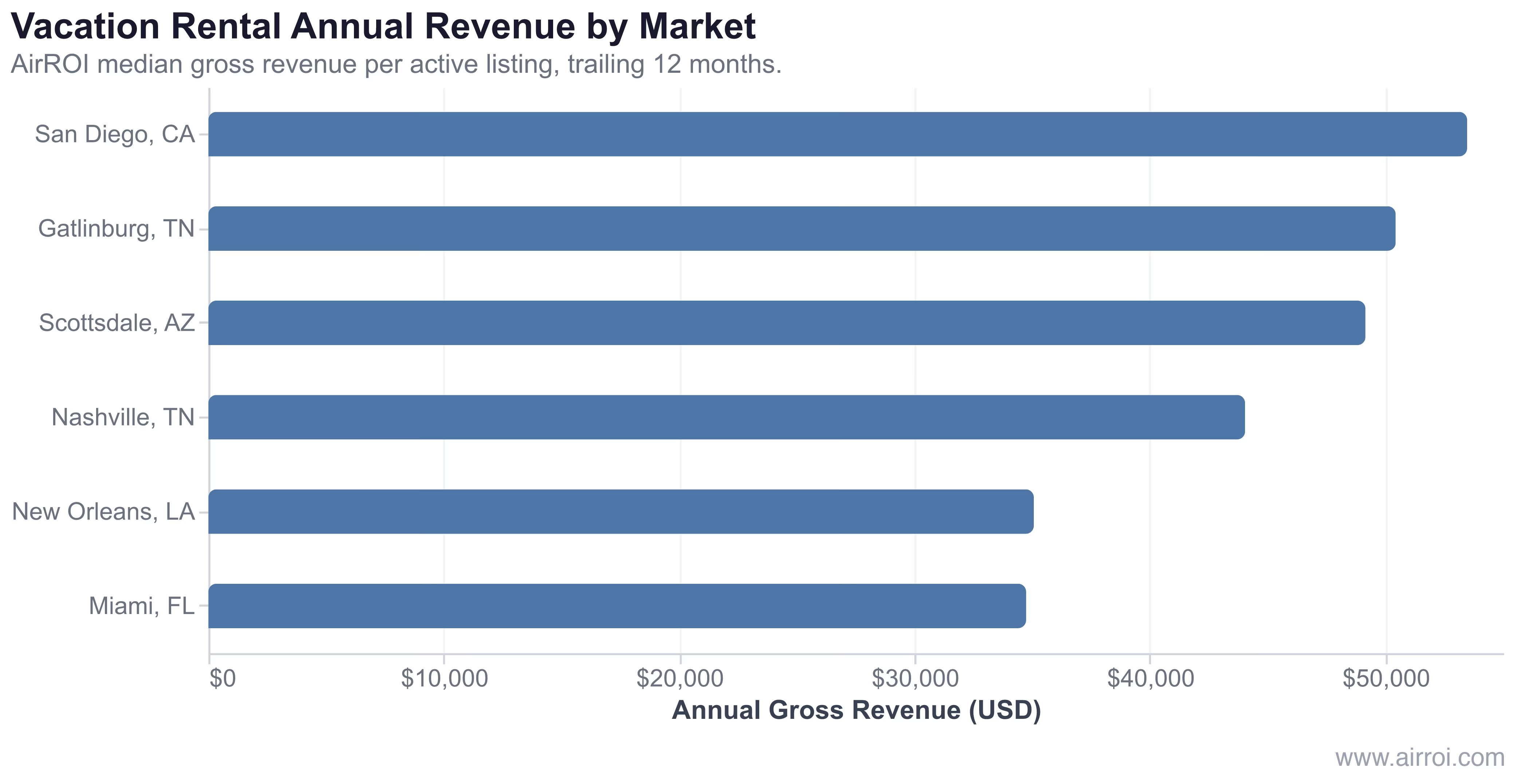
In AirROI's analysis of 36,569 active listings across San Diego, Gatlinburg, Scottsdale, Nashville, New Orleans, and Miami, median annual gross revenue ranges from $34,738 (Miami) to $53,472 (San Diego). Gatlinburg — a mountain resort market — lands at $50,438 despite modest home values, reflecting how concentrated seasonal demand drives revenue even without year-round tourism. Nashville's $44,039 median reflects its event- and entertainment-driven demand pattern, while New Orleans ($35,065) demonstrates that high ADR doesn't automatically produce top-line revenue if occupancy lags.
Vacation rental revenue is the product of three decisions: where you buy, how you price, and which guests you design the property for. Markets with $50,000+ medians share one trait — demand that exceeds supply for most of the calendar year.
Vacation Rental vs Other Accommodation Types
| Feature | Vacation Rental | Hotel | Long-Term Rental | Mid-Term Rental |
|---|---|---|---|---|
| Typical stay | 2–14 nights | 1–5 nights | 12+ months | 1–6 months |
| Furnishing | Fully furnished | Furnished room | Typically unfurnished | Fully furnished |
| Kitchen | Full kitchen | None or kitchenette | Unfurnished kitchen | Full kitchen |
| Space | Entire property | Single room | Entire property | Entire property |
| Revenue per night | High | Highest | Lowest | Moderate |
| Guest turnover | Frequent | Very frequent | Rare | Occasional |
| Management intensity | High | Professional staff | Low | Low–moderate |
| Seasonal pricing | Dynamic | Dynamic | Fixed (annual) | Semi-fixed |
What Drives Vacation Rental Performance
Location and Demand Anchors
Amenity Premium
Platform Distribution
Regulatory Compliance
Vacation Rental vs Long-Term Rental: Revenue Comparison
The core investment question is whether the vacation rental premium justifies the added complexity. In most destination markets, the answer is yes — but the comparison requires honest accounting of expenses.
A San Diego vacation rental generating $53,472 in gross revenue with 53% occupancy (roughly 193 booked nights) earns approximately $277 per booked night. A comparable long-term lease in San Diego might produce $3,000–$3,500 per month ($36,000–$42,000 annually) with near-zero management overhead. The vacation rental gross revenue advantage is real but the net advantage narrows after platform fees (typically 3–5% host fee on Airbnb), cleaning ($100–$250 per turn), and property management (20–30% of revenue for full-service management).
Frequently Asked Questions
A vacation rental is a type of short-term rental specifically marketed toward leisure travelers staying in furnished homes, cabins, or condos. Short-term rental is the broader category that includes vacation rentals, business travel stays, and any rental under 30 days. All vacation rentals are short-term rentals, but not all short-term rentals are vacation rentals.
Earnings depend heavily on market and location. AirROI data shows median annual gross revenue of $53,472 in San Diego, $50,438 in Gatlinburg, and $49,153 in Scottsdale — all top vacation rental destinations. Markets with strong year-round tourism generally out-earn those reliant on a single peak season.
Most vacation rental hosts list on Airbnb, Vrbo, and Booking.com to maximize visibility. Airbnb attracts a broad traveler base, Vrbo focuses on family and group travel, and Booking.com reaches international travelers. Using a channel manager to sync calendars across platforms prevents double bookings and simplifies multi-platform management.
Occupancy is one of the two levers (alongside ADR) that determine RevPAR and total revenue. In AirROI's basket of top vacation markets, occupancy ranges from 44% to 55%. San Diego's 53% occupancy paired with a $394.90 ADR produces $53,472 in median annual gross revenue — demonstrating how occupancy and nightly rate compound together.
In most destination markets, yes — on a per-night basis. A San Diego vacation rental generating $53,472 annually from roughly 193 booked nights earns far more per occupied day than a comparable long-term lease. The trade-off is higher operating costs: cleaning, furnishing, platform fees, and active management reduce net margins compared to a hands-off long-term lease.