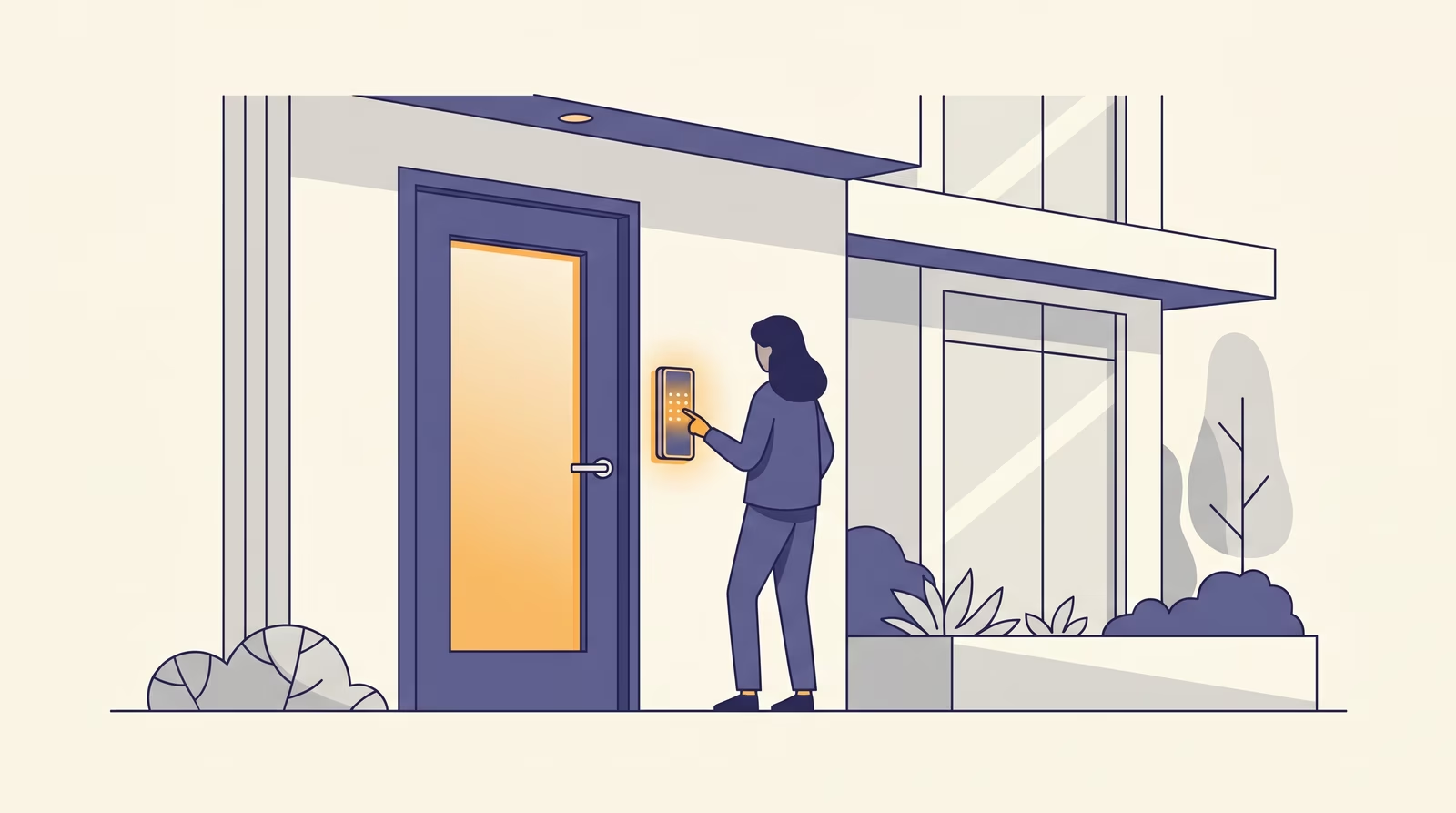
Self Check-In

Self check-in is a keyless entry system that allows short-term rental guests to access a property independently — without meeting the host in person — using a smart lock, lockbox, or keypad. Each guest receives a unique access code tied to their reservation. Airbnb badges listings that offer it and surfaces them to travelers who filter for the feature, making self check-in one of the highest-impact operational upgrades an STR host can make.
Key Takeaways
- Self check-in removes in-person key handoffs, letting guests arrive at any hour without coordinating schedules with the host
- Smart locks with unique per-guest codes are the most secure option — access logs record every entry and codes expire automatically at check-out
- Airbnb and other platforms badge and filter for self check-in, directly expanding a listing's search visibility
- Integration with a property management system (PMS) automates code generation and expiration for each reservation
- Clear pre-arrival instructions with photos or short video reduce check-in support requests to near zero
Self Check-In Methods
Not every access method fits every property or host. The four main approaches differ in cost, security, and the degree of remote control they offer.
Lockboxes — A combination box mounted near the entrance holds a physical key. The host shares the lockbox code in pre-arrival messaging. Lockboxes cost $20–$50 and work without internet, but codes must be changed manually between guests, and any copied key stays in circulation until the lock is re-keyed.
Keypad Deadbolts (offline) — Standalone keypad locks that operate without WiFi. Codes are changed by entering an admin sequence directly on the keypad. Reliable in low-connectivity areas, but the lack of remote management makes them less practical for high-turnover properties.
Building Access Systems — In apartment or condo buildings, guests may also need a fob or buzzer code for the building entrance in addition to the unit lock. Some buildings integrate with smart intercom systems (Butterfly MX, Latch) that allow one-time guest access codes without a physical fob.
Self Check-In Method Comparison
| Method | Cost | Security | Remote Management | Best For |
|---|---|---|---|---|
| Smart lock (WiFi) | $150–$350 | High | Full remote control | Active hosts, multi-property |
| Smart lock (Bluetooth) | $100–$250 | High | Requires proximity | Low-volume hosts near property |
| Lockbox | $20–$50 | Moderate | Manual code changes | Budget setups, rural locations |
| Keypad deadbolt (offline) | $80–$200 | Moderate | Manual code changes | Low-connectivity properties |
| In-person handoff | Free | Variable | Not applicable | — |
How Self Check-In Works End-to-End
The operational flow is straightforward once the hardware is in place.
- Reservation confirmed — the PMS or smart lock app generates a unique 4–6 digit code for the guest's check-in window
- Pre-arrival message — the host sends step-by-step instructions (ideally with a photo of the door and lock) 24–48 hours before arrival through the messaging sequence
- Guest arrives — the guest enters their code; the lock logs the entry with a timestamp
- Check-out — the code expires automatically at the scheduled check-out time; no host action required
- Turnover — the next guest receives a different code; the previous guest's code is already invalid
This loop runs without host involvement at any step, which is why self check-in is foundational for hosts managing more than one or two properties.
Switching from in-person key handoffs to a WiFi smart lock is often the single change that makes managing a second or third property operationally viable — it removes the scheduling constraint that scales linearly with each new listing.
Why Self Check-In Matters for Platform Visibility
Security Considerations
Self check-in introduces different risk vectors than traditional key handoffs, but well-configured systems are demonstrably more secure. Smart locks create a timestamped access log for every entry — something a physical key cannot provide. Per-guest codes that expire at check-out eliminate the most common key-related risk: a guest retaining access after departure. A few additional practices close the remaining gaps:
- Unique codes per reservation — never reuse the same code; most smart lock apps and PMSs automate this
- Auto-lock enabled — configure the lock to re-engage within 30–60 seconds of being opened, preventing guests from inadvertently leaving the door unlocked
- Exterior camera at the entrance — provides a visual record of arrivals without surveilling guest privacy inside the unit
- Lockbox backup — a spare key in a lockbox serves as a failover if the smart lock battery dies, WiFi goes down, or a guest cannot operate the technology; include the lockbox location in your welcome guide
Best Practices for Setup and Guest Experience
The hardware is the easy part. Guest experience quality comes from the instructions and the failover plan.
Test every guest code before the reservation starts. Most PMSs have a test function; use it. A code that fails at 11 PM is a 1-star review waiting to happen.
Communicate battery status proactively. WiFi smart locks drain batteries faster than offline locks. Set a calendar reminder to replace batteries every 90 days, or choose a lock model that sends low-battery alerts.
Frequently Asked Questions
Self check-in on Airbnb means guests access the property independently without meeting the host in person, typically via a smart lock code, a lockbox containing a key, or a keypad entry system. Airbnb highlights self check-in as a searchable filter and badges listings that offer it, increasing visibility in search results.
The best smart lock for Airbnb balances remote code management, auto-lock, and PMS integration. Popular choices include the August WiFi Smart Lock for retrofitting existing deadbolts, the Schlage Encode for built-in WiFi without a hub, and the Yale Assure Lock 2 for deep PMS compatibility. Any of these three allows unique per-guest codes that expire automatically at check-out.
Self check-in with a smart lock is generally more secure than traditional key handoffs. Smart locks log every entry with a timestamp, issue unique codes per reservation that expire automatically, and eliminate the risk of unreturned or copied keys. Pairing with a security camera at the entrance adds an additional verification layer.
Yes. Airbnb's search algorithm treats self check-in as a quality signal and surfaces listings with the feature more prominently to guests who have the filter active. Because a large share of travelers specifically search for self check-in, enabling it expands the audience a listing reaches without changing location or price.
Yes. Offline keypad deadbolts and lockboxes operate entirely without WiFi — guests use a numeric code the host sets manually. The tradeoff is that codes cannot be changed remotely; the host or a co-host must physically update them between reservations. For properties in areas with unreliable internet, a lockbox or offline keypad is a reliable fallback.