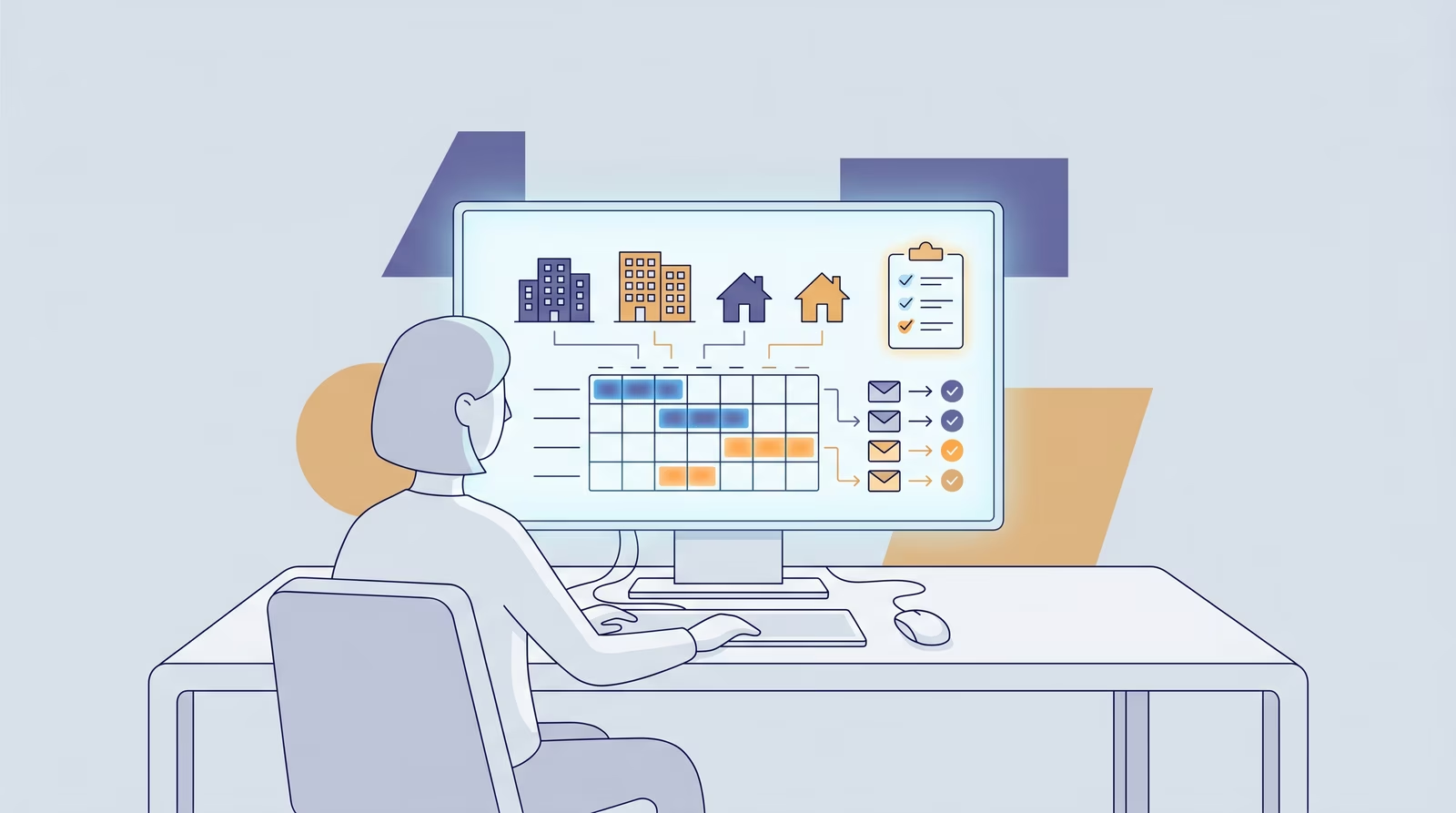
Property Management System (PMS)

A property management system (PMS) is software that centralizes reservations, calendar syncing, guest communication, cleaning coordination, and financial reporting for short-term rental hosts. It serves as the operational backbone for anyone running one or more listings across Airbnb, Vrbo, Booking.com, or a direct booking site — replacing the patchwork of spreadsheets, manual messages, and phone calls that become unsustainable the moment a second property enters the picture.
Key Takeaways
- A PMS unifies reservations, calendars, and operations into a single dashboard, eliminating the need to log into each OTA separately
- Integrated channel managers push real-time availability updates to every platform, preventing double bookings
- Automated guest communication and turnover scheduling replace hours of manual, repetitive work each week
- A PMS enables a direct booking website, cutting OTA commissions of 15–20% per reservation
- Professional property managers operating at scale — managing 10, 50, or 500+ listings — rely on a PMS as the core infrastructure for the entire business
What a PMS Does
A short-term rental PMS handles five interconnected operational layers:
| Layer | What It Does | Without a PMS |
|---|---|---|
| Reservation management | Aggregates bookings from every platform into one calendar | Manual cross-checking; double bookings likely |
| Channel distribution | Pushes availability and rate updates to all OTAs simultaneously | Updates lag; platforms go out of sync |
| Guest communication | Sends scheduled messages on booking confirmation, pre-arrival, check-in, and checkout triggers | Manual copy-paste for every guest, every stay |
| Turnover coordination | Notifies cleaning crews on checkout; tracks task completion with checklists and photos | Phone calls or texts to staff; no visibility into status |
| Financial reporting | Tracks revenue, expenses, owner statements, and occupancy-tax records | Spreadsheets; no audit trail |
Core Feature Modules
Reservation & Calendar Management — a unified calendar that aggregates bookings from Airbnb, Vrbo, Booking.com, and your direct booking site. When a reservation arrives on any channel, the PMS blocks the dates everywhere else within seconds, eliminating the single most costly mistake in multi-channel hosting.
Direct Booking Website — many PMS platforms include a bookable website builder with integrated payment processing. Capturing even a small percentage of reservations directly — bypassing the 15–20% OTA commission — meaningfully improves net income per property.
PMS vs. Channel Manager vs. Direct Booking Tools
These three tools overlap but are not interchangeable:
| Tool | Primary Function | Typical User |
|---|---|---|
| PMS | Full operations platform: reservations, messaging, tasks, reporting, and distribution | Hosts with 2+ properties or multi-channel listings |
| Channel manager | Syncs availability and rates across OTAs only | Single-property hosts on 3+ platforms |
| Direct booking site | Accepts reservations without OTA commissions | Any host wanting to reduce platform dependency |
Modern PMS platforms typically absorb channel manager and direct booking functionality, making them the single-platform solution for operators beyond the hobbyist stage. A standalone channel manager makes sense only if your sole need is cross-platform sync and you don't require automation, task management, or reporting.
A PMS does not make you a better host — it removes the operational friction that prevents a good host from scaling. The automation handles the repetitive layer so attention goes to guest experience and revenue strategy.
Choosing a PMS: Factors That Actually Matter
| Factor | What to Evaluate | Why It Matters |
|---|---|---|
| Channel integrations | Number and depth of OTA connections | More channels = wider distribution; shallow integrations break under rate-update load |
| Direct booking support | Built-in website builder, payment processing | Recaptures 15–20% OTA commission on shifted bookings |
| Automation depth | Message templates, task triggers, smart conditional rules | Determines real weekly time savings |
| Pricing integration | Native or API connection to dynamic pricing tools | Revenue optimization without manual rate entry |
| Reporting | Owner statements, occupancy-tax reports, P&L by property | Financial visibility and regulatory compliance |
| Mobile experience | App quality for on-the-go operations | Most host decisions happen away from a desktop |
| Scalability | Per-listing pricing tiers, multi-user permissions | Cost-effectiveness and team access as the portfolio grows |
The Professional Management Case
Frequently Asked Questions
A property management system (PMS) is software that centralizes reservation management, calendar syncing, guest communication, task automation, and financial reporting for short-term rental hosts and property managers. It serves as the operational hub for running one or more rental properties.
A PMS is not strictly necessary for a single listing on one platform, but it can still save time by automating guest messages, coordinating cleaning schedules, and tracking finances. Most hosts find a PMS essential once they manage two or more properties or list on multiple platforms.
A PMS is a comprehensive operations platform that handles reservations, guest communication, task management, and reporting. A channel manager is a more focused tool that syncs availability and rates across booking platforms. Many modern PMS solutions include built-in channel manager functionality.
Most PMS platforms expose an open API or a native integration with tools like PriceLabs, Wheelhouse, or Beyond. The pricing tool pushes rate recommendations to the PMS, which distributes them to every connected booking channel — so a single rate update propagates across Airbnb, Vrbo, and your direct booking site without manual entry.
Prioritize channel breadth (how many OTAs it connects), automation depth (message templates, cleaning triggers, smart rules), direct booking support, dynamic pricing integrations, and mobile app quality. Evaluate total cost relative to the OTA commissions you can recapture through direct bookings — typically 15–20% per reservation.