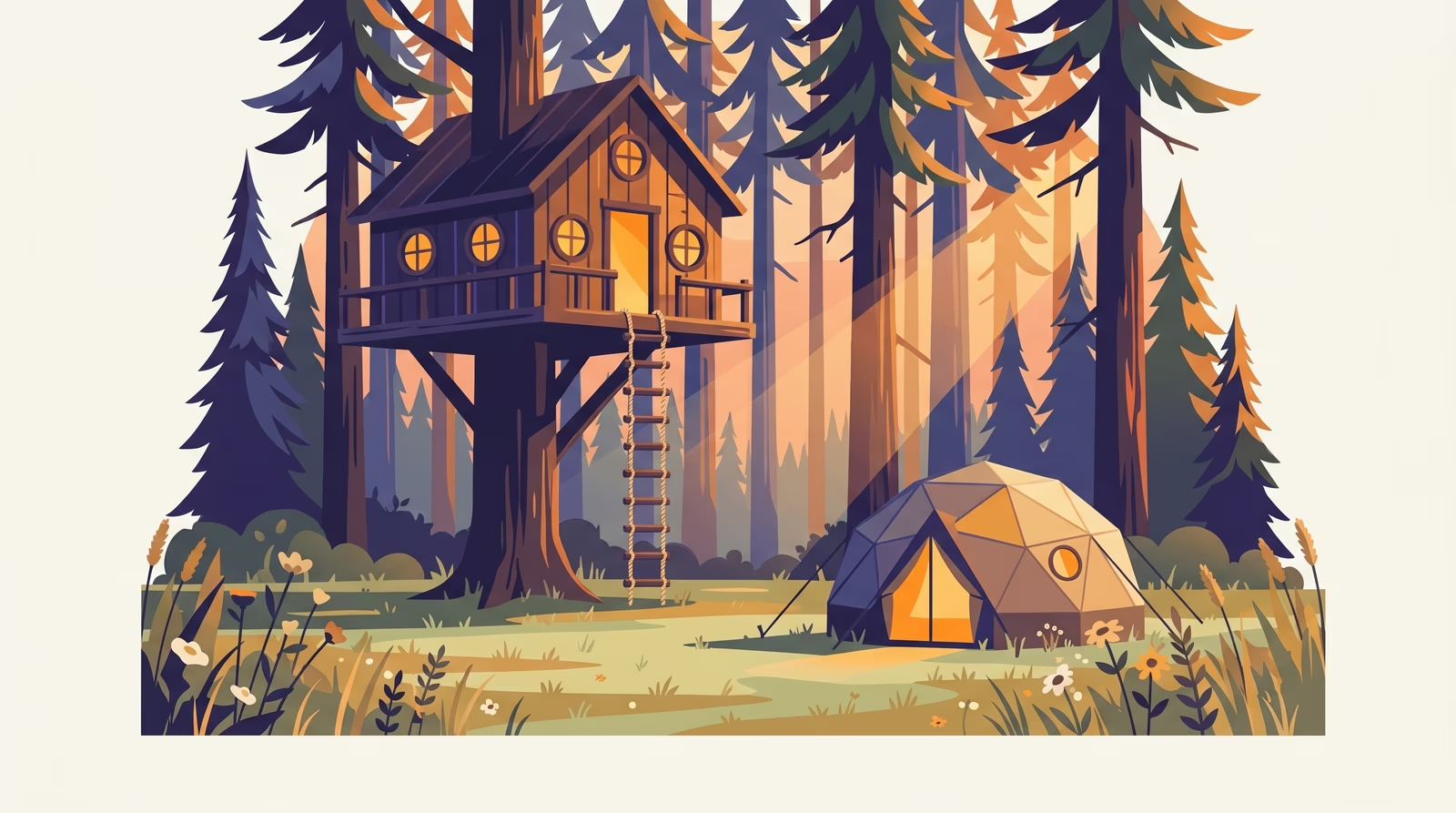
Unique Stay

Key Takeaways
- Airbnb's unique stays category has dedicated search filters — treehouses, cabins, domes, boats, castles — that surface qualifying properties to experience-seeking guests before they ever type a location
- Properties in this category typically command 20–60% higher average daily rates than comparable entire home listings in the same market, driven by novelty and limited supply
- Booking lead times for unique stays trend longer than standard listings — guests plan bucket-list trips weeks or months in advance — which improves revenue predictability
- Higher construction, maintenance, and insurance costs are the primary offsets; the strongest returns come from properties with inherent character (an existing A-frame or converted barn) rather than purpose-built novelty
- Vacation rental guests choosing unique stays prioritize the experience over square footage, but basic comfort — quality bedding, a clean bathroom, temperature control, reliable Wi-Fi — remains non-negotiable
Types of Unique Stays
Airbnb organizes unique stays into specific property categories, each with its own guest profile, operating requirements, and revenue dynamics:
| Category | Examples | Primary Guest Appeal |
|---|---|---|
| Nature-based | Treehouses, earth homes, caves, shepherds huts | Outdoor immersion, natural surroundings |
| Alternative structures | Yurts, geodesic domes, tiny homes, containers | Minimalist and innovative architecture |
| Heritage and character | Castles, towers, lighthouses, windmills, historic estates | History, architecture, luxury |
| Mountain / cabin | A-frames, log cabins, ski chalets | Seasonal recreation, scenic settings |
| Water-based | Houseboats, sailboats, floating homes | Waterfront experience, nautical lifestyle |
| Glamping | Luxury tents, safari camps, bubble domes | Comfort with nature proximity |
How Airbnb Surfaces Unique Stays
Airbnb's search homepage displays category icons — Treehouses, Cabins, Domes, Boats, Amazing views, Castles — that let travelers browse by property type before they specify a destination. A qualifying unique stay listing can appear on the first page of Airbnb's discovery interface for millions of users regardless of review history or market maturity.
Standard apartments and condos never appear in these category tabs, no matter how well-reviewed or competitively priced. The platform-level placement is, in effect, a permanent marketing advantage built into the listing's property type.
The category filter is not a promotion — it is a structural feature of Airbnb's search architecture. A treehouse in a low-demand market benefits from national discovery exposure that an identically priced apartment in a high-demand market simply cannot access.
Unique Stay vs Standard Listing: Key Differences
| Metric | Unique Stay | Standard Entire Home |
|---|---|---|
| Average nightly rate | 20–60% premium over market | Market baseline |
| Booking lead time | Longer (planned, bucket-list trips) | Shorter (flexible, spontaneous travel) |
| Average stay length | 2–3 nights | 3–5 nights |
| Repeat bookings | Lower (once-in-a-while experience) | Higher (habitual travelers) |
| Social media shares | Very high (guest-generated content) | Low |
| Seasonal sensitivity | Often elevated (outdoor exposure) | Market-dependent |
| Construction / setup cost | Significantly higher for purpose-built | Standard renovation cost |
| Insurance complexity | Higher (non-standard structures) | Standard homeowner / landlord policy |
| Zoning / permit risk | Higher (unconventional structures) | Standard STR permitting |
Why Unique Stays Command a Premium
The pricing power of unique stays rests on supply scarcity, not just guest preference. A standard two-bedroom apartment in Nashville competes with thousands of nearly identical listings. A treehouse in the same city competes with a handful.
Markets like Gatlinburg, Tennessee and Scottsdale, Arizona illustrate the broader dynamic. Gatlinburg's supply of cabin and nature-based properties supports an AirROI-tracked median ADR of $376.50 — among the highest in the basket and sustained by guests who book 57.7 days in advance for planned mountain escapes. Scottsdale's luxury villa and resort-style supply supports a median ADR of $421.10. In both cases, differentiated supply supports elevated pricing that a homogenous apartment market cannot replicate.
Guests also pay for the story. A stay in a treehouse produces shareable content — photos, videos, reviews — that guests distribute across social media without any cost to the host. This organic marketing loop drives repeat inquiries from new guests, reducing the customer acquisition cost that standard listings must offset through discounting or advertising spend.
Zoning, Permitting, and Construction Realities
The premium ADR of unique stays comes with meaningful barriers to entry. Purpose-built unconventional structures — a treehouse platform, a geodesic dome foundation, a floating houseboat slip — face zoning and building-code scrutiny that standard single-family homes do not.
Key risks to evaluate before investing:
- Setback and height requirements: Many jurisdictions restrict structures in tree canopy or over water, even on private land
- STR permit eligibility: Some cities permit STRs only in structures classified as single-family residences; a dome or yurt may not qualify
- Insurance underwriting: Non-standard materials and elevated or water-based placements increase premiums and may require specialty commercial policies
- Contractor availability: Builders experienced with treehouses, domes, and alternative structures are scarce; construction timelines and costs are harder to predict
Unique Stay Investment Considerations
The ROI calculus for unique stays differs materially from standard STR acquisitions. The premium ADR is real, but the acquisition or construction cost is also higher, and the guest profile requires a different operational approach.
The experience must justify the price. Guests paying a 40% premium for a treehouse expect the structure itself to deliver — solid construction, quiet sound isolation, weather tightness, and a setting that matches the listing photos. A novelty property that underdelivers generates the kind of detailed critical reviews that suppress future bookings more severely than the same critique would in a standard listing.
Frequently Asked Questions
Airbnb classifies unique stays as properties with unconventional architecture or settings. This includes treehouses, yurts, tiny homes, A-frames, geodesic domes, barns, boats, castles, caves, containers, earth homes, houseboats, igloos, lighthouses, shepherds huts, towers, trains, and windmills. The property must offer a distinctive experience beyond a standard home or apartment.
Yes, unique stays typically command 20–60% higher nightly rates than comparable standard listings in the same area. The novelty and visual appeal of these properties create sustained demand and allow premium pricing, and Airbnb's dedicated unique stays search filter provides additional organic visibility that standard listings must earn purely through reviews.
The main challenges include higher construction and maintenance costs for unconventional structures, stricter building code and zoning requirements, limited availability of contractors experienced with non-standard builds, potential accessibility limitations for guests, and seasonal constraints for outdoor-oriented properties like treehouses and yurts. Insurance can also be more complex for unusual property types.
Airbnb surfaces unique stays through dedicated category filters on its search homepage — icons like 'Treehouses,' 'Cabins,' 'Domes,' 'Boats,' and 'Castles' let travelers browse by property type rather than location. This category placement gives qualifying listings front-page exposure that standard apartments cannot access, regardless of review count or pricing.
It depends on the market and structure type. The premium ADR is real, but construction costs for purpose-built unique stays (a treehouse or dome from scratch) are substantially higher than standard renovations. The strongest returns come from properties that require minimal structural novelty — an existing A-frame cabin or a converted barn — where the unique character is inherent rather than engineered.