
Available Nights

Key Takeaways
- Available nights are calendar dates genuinely open for reservations, excluding host-blocked and maintenance dates
- Occupancy rate = Booked Nights ÷ Available Nights — every change in either figure moves this metric
- Total available nights across all active listings is the most accurate proxy for market supply capacity
- Blocking dates raises occupancy percentage without adding revenue; the only way to grow both is to book more of a large available-nights base
- Across AirROI's basket of 7 US markets, median occupancy ranges from 44% (Austin) to 55% (San Francisco), reflecting how available-nights strategy and local demand interact
How Available Nights Are Calculated
The count starts with every calendar date in the analysis window, then subtracts nights that are genuinely unavailable to guests.
| Calendar Status | Counts as Available? | Notes |
|---|---|---|
| Open for booking | Yes | Core available night |
| Booked by guest | No (occupied) | Counts as booked night, not available |
| Blocked by host | No | Personal use, maintenance, owner stays |
| Minimum-stay gap | Depends on platform | Short gaps between bookings may go unfilled |
| Instant Book enabled | Yes | Reduces friction but does not change the count |
Worked example: A property with 30 days in a month, 5 blocked for personal use, and 18 booked by guests produces:
- Available nights: 25 (30 − 5 blocked)
- Booked nights: 18
- Occupancy rate: 72% (18 ÷ 25)
If the host removes 5 blocked dates and holds the same 18 bookings, occupancy drops to 60% (18 ÷ 30) — but revenue is unchanged. Available nights determine the denominator, not the income.
Occupancy Across Markets: Available Nights in Action
Because occupancy is defined as booked nights divided by available nights, market-level occupancy data captures both guest demand and aggregate host availability strategy in a single figure.
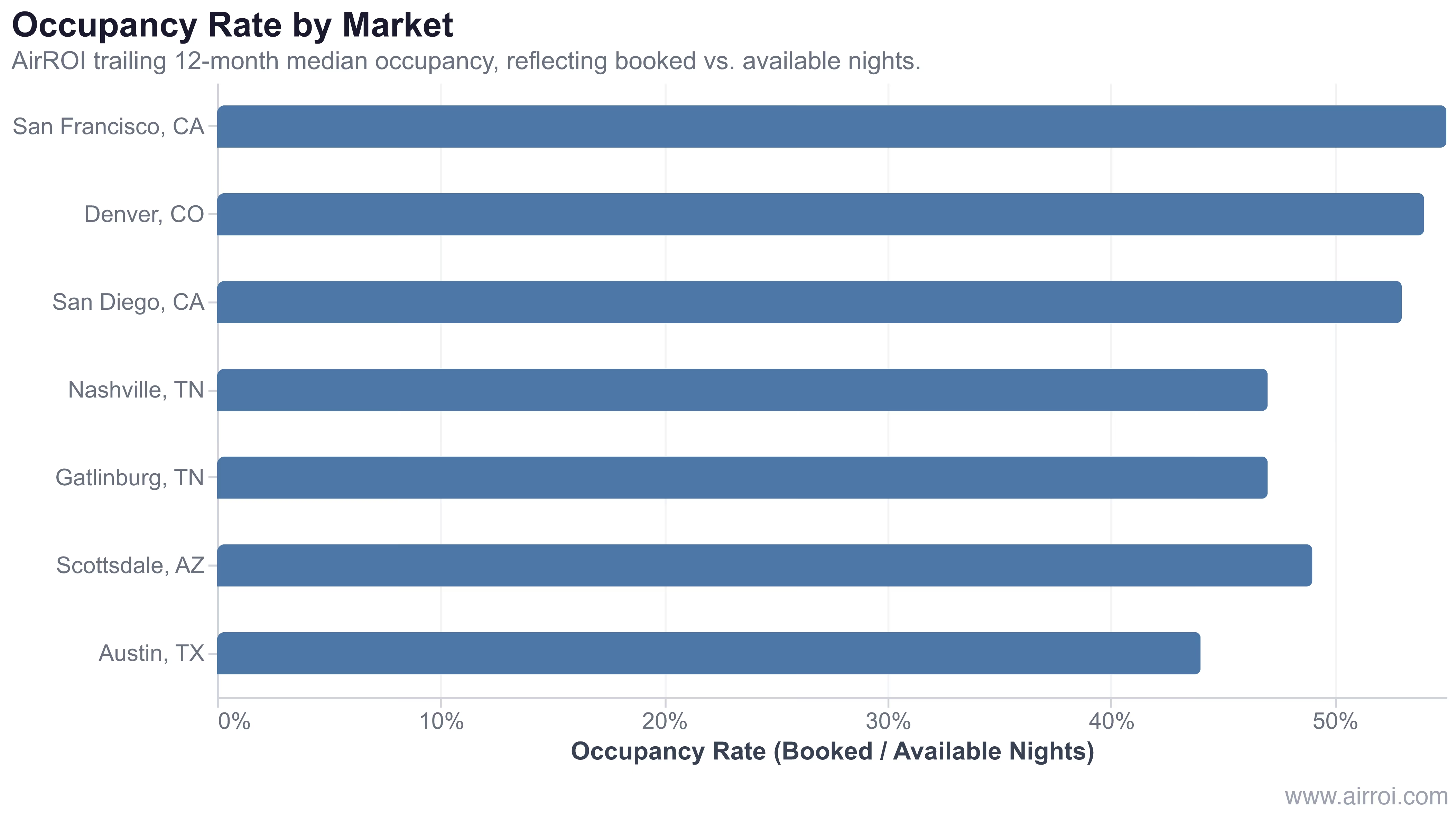
In AirROI's analysis of approximately 40,159 active listings across seven US markets, occupancy spans from 44% in Austin to 55% in San Francisco — a 25% relative gap driven by both local demand depth and how aggressively hosts restrict availability. San Diego (53%) and Denver (54%) cluster near the top despite very different markets, while Nashville (47%) and Gatlinburg (47%) show that high-revenue resort markets can achieve strong RevPAR even at moderate occupancy by commanding premium ADR.
When two markets share similar occupancy rates but diverge sharply on ADR — as Nashville ($353.6) and Denver ($221.5) do — the productivity of each available night is what separates a strong STR from a mediocre one.
Why Available Nights Matter for Hosts and Investors
Revenue ceiling. Every blocked night is forfeited revenue. At a median ADR of $297.7 (Austin), blocking 30 unnecessary nights per year costs roughly $8,931 — before factoring in the impact on search ranking algorithms that reward high booking rates over large available-nights pools.
RevPAR accuracy. RevPAR multiplies ADR by occupancy, and occupancy uses available nights as its base. A host who inflates occupancy by blocking dates gains a flattering percentage but suppresses the RevPAR denominator. Accurate RevPAR requires accurate available-nights reporting — which is why institutional operators track both figures separately.
Available Nights Optimization
| Strategy | Benefit | Trade-Off |
|---|---|---|
| Maximize open dates | Higher revenue ceiling, better search rank | Requires disciplined pricing to avoid burnout |
| Strategic blocking | Higher occupancy percentage on paper | Lost revenue on every blocked night |
| Seasonal availability | Focus inventory on peak-demand periods | Misses off-season bookings |
| Gap-night management | Fills orphan nights between longer stays | May require shorter minimum-stay windows |
| Shorter minimum stay | Widens bookable audience | Increases turnover frequency and cleaning cost |
Managing Available Nights Effectively
Audit your blocked dates quarterly — ensure every blocked night has a deliberate purpose rather than sitting as an artifact of outdated settings. Pay particular attention to:
- Turnover gaps: Blocking one full day between guests is standard; blocking three or four compresses your available-nights base meaningfully over a year.
- Off-season availability: Reducing minimum stay during low-demand periods prevents orphan nights that sit empty between bookings.
- Comp-set comparison: Use a market dashboard to compare your available-nights ratio against competitors. Restricting availability more than the market average hands bookings to more open listings.
- Platform calendar sync: If you list on multiple platforms, iCal sync errors can inadvertently block dates, understating your true available nights. An accurate availability calendar is prerequisite to reliable occupancy tracking, which is itself the foundation of guest analytics and STR optimization.
Frequently Asked Questions
An available night is any calendar date that a property is open for guest booking. Nights blocked by the host for personal use, maintenance, or minimum stay gaps are not considered available. Only nights genuinely open to receiving reservations count toward availability metrics.
Occupancy rate is calculated as booked nights divided by available nights. Reducing available nights by blocking dates increases your occupancy percentage even without additional bookings. This is why comparing occupancy rates meaningfully requires knowing each listing's available-nights context.
Not necessarily. Strategic blocking for maintenance, personal use, and turnover days is healthy. However, excessively restricting availability limits booking potential and revenue. Most professional hosts aim for 300–340 available nights per year, reserving time for deep cleans and property upkeep.
RevPAR (Revenue Per Available Room/Night) is calculated as ADR multiplied by occupancy rate, where occupancy is booked nights divided by available nights. Fewer available nights raise occupancy percentage but lower the base over which revenue is measured, so maximizing both bookings and availability produces the strongest RevPAR.
They can. When a host sets a two- or three-night minimum, short calendar gaps between bookings may go unfilled — effectively converting available nights into lost inventory. Gap-night management, including temporarily lowering minimums for those orphan dates, recovers that otherwise-forfeited capacity.