
Airbnb Data Show Superhosts Win… Except at the Very Top

The coveted "Superhost" badge on Airbnb – it signals quality, reliability, and experience to potential guests. Conventional wisdom holds that achieving Superhost status is a golden ticket to increased bookings and higher revenue. But is it always the ultimate key to maximizing your earnings, especially when digging into Airbnb data? As hosts navigate the competitive short-term rental market, understanding the real impact of this status through Airbnb analytics is crucial.
At AirROI, we dove deep into Airbnb performance data, analyzing thousands of listings using sophisticated Airbnb analytics techniques, leveraging big data platforms and machine learning models, to understand the relationship between Superhost status, revenue, occupancy, and daily rates. Does being a Superhost guarantee top performance, especially among the highest earners? Let's see what the Airbnb data says.
What Makes an Airbnb Superhost? (A Quick Refresher)
Before diving into the Airbnb data analysis, let's recap. Superhosts are experienced hosts recognized for consistently providing outstanding hospitality. They need to meet criteria like:
- Maintaining a high overall rating (4.8+)
- Completing a significant number of stays or nights booked
- Keeping cancellations low (<1%)
- Responding quickly to guests (90%+ response rate)
These aren't easy feats – they require dedication and excellent hosting practices.
The Big Picture: Superhosts Generally Outperform
Our initial Airbnb analytics confirm the widely held belief: Superhosts, on average, significantly outperform Regular hosts.
Looking across major currencies like USD, EUR, and BRL, our analysis of Trailing Twelve Month (TTM) data revealed:
- Higher TTM Revenue: Superhosts consistently earned considerably more revenue (often 50-60% more on average) than Regular hosts.
- Massively Higher Occupancy: This revenue difference wasn't primarily driven by higher prices. Instead, Superhosts boasted dramatically higher Airbnb occupancy rates. They simply kept their properties booked far more often.
- Comparable or Slightly Lower ADR (Initially): Interestingly, across the entire pool of listings, the Average Daily Rate (Airbnb ADR) for Superhosts was often slightly lower than for Regular hosts. This reinforces that their overall success comes from consistent bookings, likely fueled by guest trust, positive reviews, and potentially better search visibility conferred by the badge.
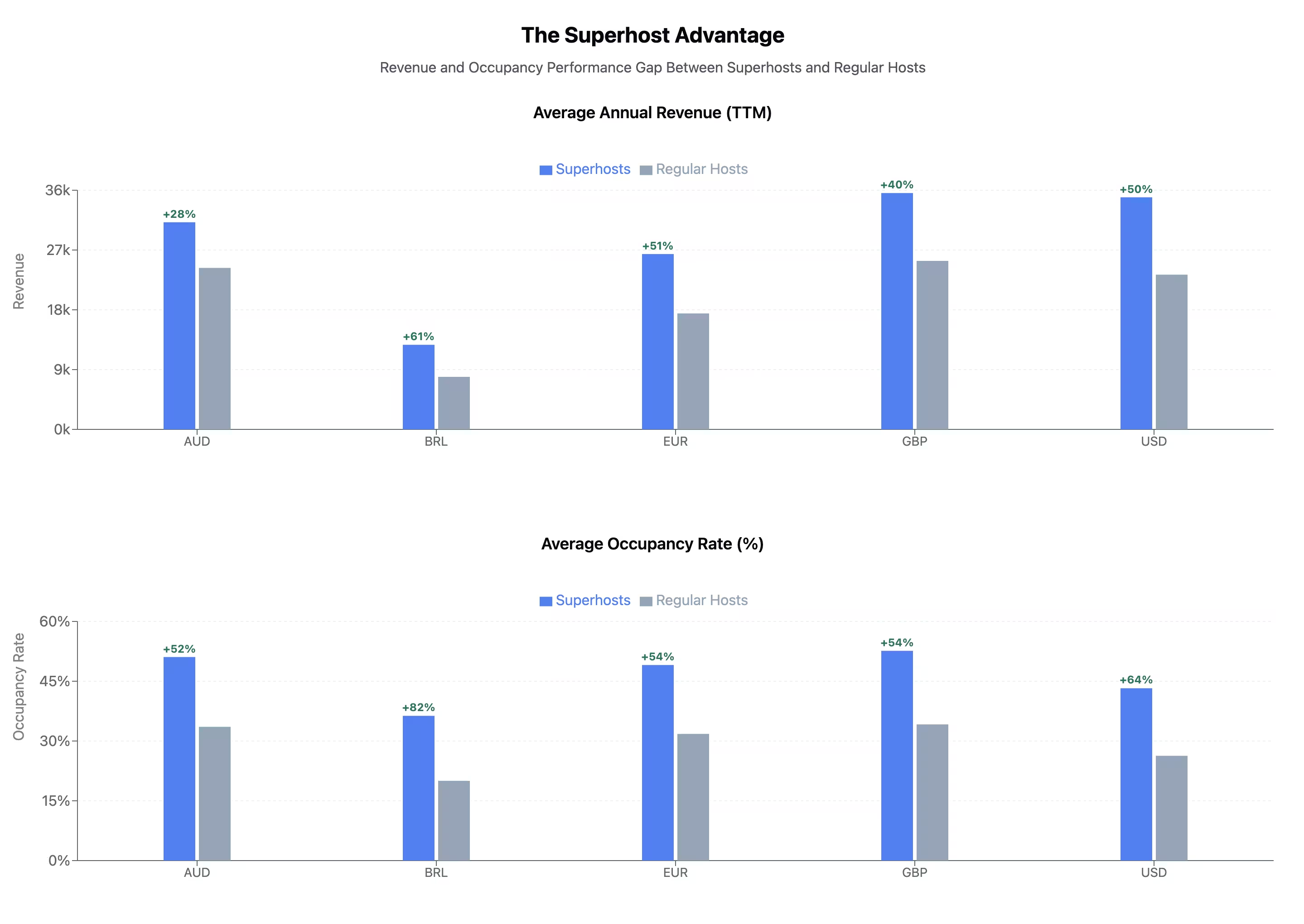
So, for the average host, striving for Superhost status seems like a clear path to better performance based on this Airbnb data. The badge likely builds trust, encourages bookings, and rewards the excellent hosting practices required to earn it.
Digging Deeper: Does the Superhost Advantage Hold for Top Earners?
The overall average is compelling, but what happens when we segment the market using more granular Airbnb analytics? Does the Superhost badge provide the same edge when comparing the absolute highest-earning properties? We analyzed Airbnb performance metrics across different revenue tiers: All Hosts, Top 50% Earners, Top 25% Earners, and the elite Top 10% Earners (calculated within each currency).
The results from our AirROI analysis were surprising.
The Big Reveal: A Dramatically Diminishing Advantage at the Top
While the Superhost advantage is clear across the general market, the revenue premium shrinks significantly – and sometimes disappears entirely – among the top-performing listings.
Here's what our Airbnb data analysis showed for key currencies like USD, EUR, and BRL:
- Top 50%: The Superhost revenue advantage drops noticeably (e.g., down to ~10-20%).
- Top 25%: The gap shrinks further (e.g., down to ~0-10%).
- Top 10%: The average TTM revenue for Superhosts and Regular hosts becomes nearly identical, or in some cases (like EUR in our sample), top-earning Regular hosts slightly out-earned Superhosts on average!
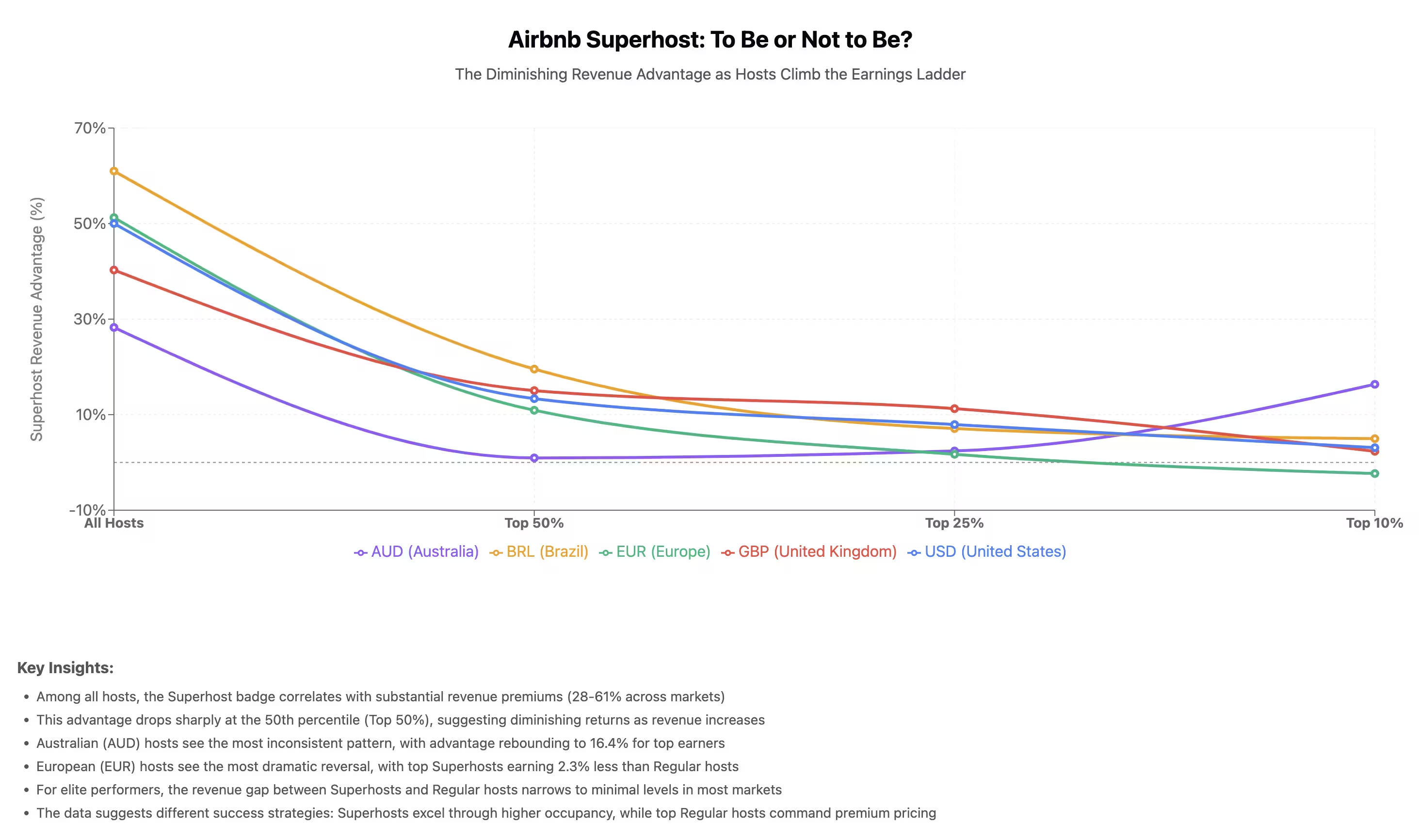 This suggests that while Superhost status is a powerful differentiator for the majority, other factors become dominant drivers of success at the absolute peak of the Airbnb data spectrum.
Occupancy vs. ADR: Different Paths to Elite Revenue
How can top-earning Regular hosts compete effectively with Superhosts if the badge drives trust and bookings? The Airbnb performance data points to distinct strategies:
- Superhosts Still Win on Occupancy: Even in the Top 10% tier, Superhosts maintained a clear advantage in Airbnb occupancy rates. Their ability to consistently fill nights remains strong.
- Top Regular Hosts Command Higher ADR: The key difference lies in the Average Daily Rate (Airbnb ADR). Top-earning Regular hosts achieved their high revenue by commanding significantly higher nightly prices than their Superhost counterparts in the same top tier.
Conclusion drawn from the Airbnb data: Top Superhosts leverage their status for consistent bookings, while top Regular hosts leverage unique property appeal, prime locations, or sophisticated pricing strategies to maximize revenue per booked night, even if it means slightly lower occupancy.
Airbnb Superhost: So, To Be or Not to Be?
Based on this Airbnb data analysis conducted by AirROI, the answer is nuanced:
- For MOST Hosts: YES. Striving for Superhost status is highly recommended. It's strongly correlated with significantly higher occupancy and overall revenue compared to the average Regular host. It's a reward for practices that genuinely improve guest experience and drive bookings.
- For TOP-TIER Aspirants: While still valuable, the Superhost badge alone isn't the determining factor for reaching the absolute peak revenue levels. Once you're competing at the top (Top 10-25%), factors like unique property value proposition, irreplaceable location, dynamic pricing mastery (Airbnb ADR optimization), and potentially larger properties or luxury amenities likely become the critical differentiators. Top-earning Regular hosts prove you can succeed immensely without the badge, likely by excelling in these other areas.
Key Takeaways from the Airbnb Data:
- Superhosts significantly outperform Regular hosts on average, primarily through higher Airbnb occupancy rates.
- The revenue advantage of Superhost status diminishes dramatically in the Top 25% and Top 10% of earners according to Airbnb analytics.
- Even among top earners, Superhosts tend to maintain higher occupancy.
- Top-earning Regular hosts often achieve peak revenue through significantly higher Average Daily Rates (Airbnb ADR).
- Achieving Superhost status is a worthwhile goal for boosting performance, but hitting the highest revenue echelons requires excellence beyond the badge itself.
Understanding these nuances through Airbnb analytics empowers hosts to set realistic goals and focus their strategies effectively. Whether that's perfecting the fundamentals to achieve Superhost or optimizing unique property features and pricing to compete at the very top, Airbnb data can light the way.
Ready to Conduct Your Own Analysis?
- Analyze competitor performance in your target neighborhoods
- Identify pricing opportunities and occupancy trends
- Create custom reports for your unique business questions
- Conduct rigorous academic research on short-term rental markets
Serious hosts, property managers, and academic researchers can leverage the same dataset used in this analysis to make data-driven decisions or produce scholarly work. The dataset is ideal for economic impact studies, tourism pattern analysis, and research into the evolution of the sharing economy. Academic institutions may contact us for special access packages designed for research purposes.